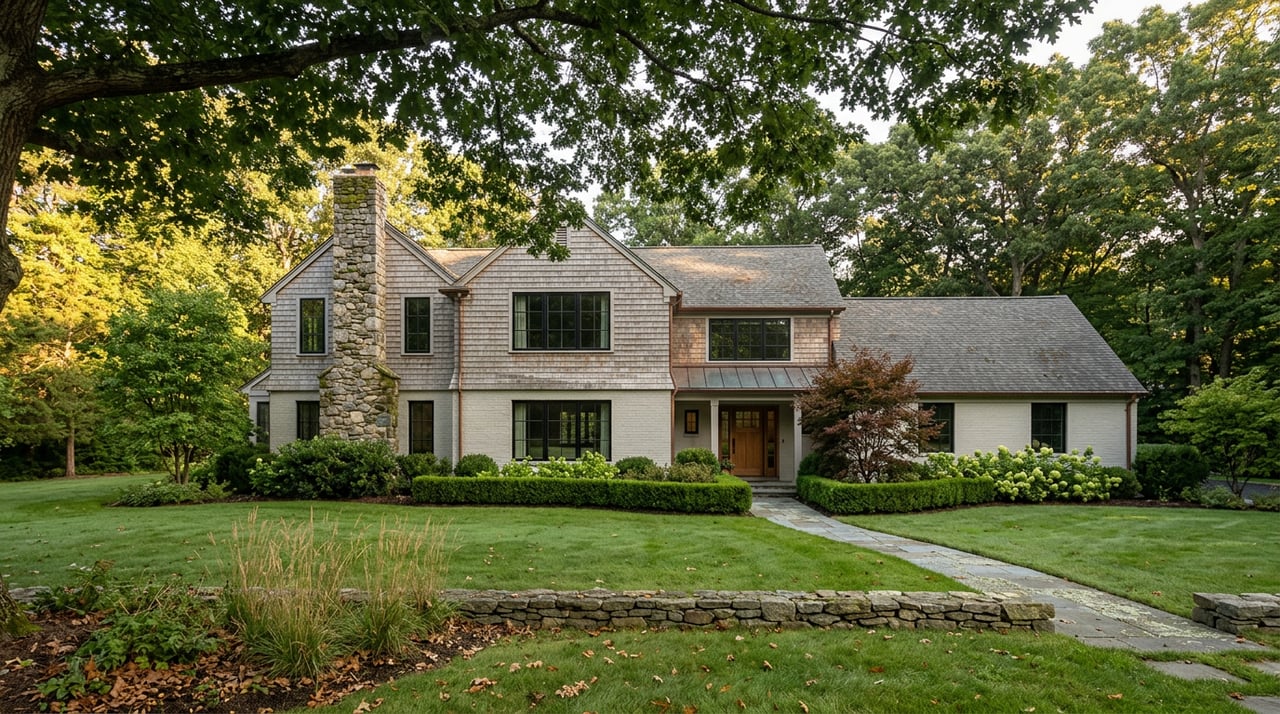
Virginia's Residential Property Disclosure Act says nothing about whether a home has ever tested high for radon. Not a required test, not a yes-or-no box, not even a soft suggestion from the seller. The state's own disclosure form goes out of its way to say the owner makes no representations about which EPA radon zone the property sits in, then tells the buyer to go find out for themselves. And yet nearly every contract that closes on a McLean home carries a radon testing contingency anyway, written as its own clause, negotiated with the same seriousness as the roof or the HVAC system. The law stays quiet. The market filled the silence on its own, and the reason traces back to what sits under the foundation, not what's written in Richmond.
What the disclosure statement actually withholds
Virginia is what real estate attorneys call a caveat emptor state, buyer beware in its original Latin. Sellers cannot lie outright or hide a defect once a buyer asks about it directly, but they are under no obligation to volunteer a problem the buyer never thought to ask about. The Virginia Residential Property Disclosure Act reflects that posture item by item. On radon specifically, the state's disclosure form directs the buyer toward the EPA's Map of Radon Zones, the Virginia Department of Health's indoor radon program, and the National Radon Proficiency Program's list of certified testers, then closes with a recommendation to order an inspection before settlement. The seller has no testing obligation to trigger in the first place.
Radon didn't even make the state's list of required disclosure topics until the 2020 General Assembly session, when lawmakers added six new items to the Statement, EPA radon zones among them, alongside lead pipes, marine clays, and defective drywall. Before that, a buyer in Fairfax County had no statutory prompt at all to think about it.
The bedrock the law doesn't mention
The reason radon shows up in nearly every McLean contract regardless of what the law requires sits several feet below the basement slab. Most of Northern Virginia is built on a layer of quartz-muscovite soil, roughly ten meters thick, resting on a bedrock of polymetamorphic schist. That schist runs higher than average in both gamma radioactivity and permeability, a combination that keeps producing radon-rich soil gas. Pressure differences inside a well-insulated, basement-heavy house draw that gas upward and indoors. The U.S. Geological Survey mapped this relationship directly in Fairfax County, matching aerial radioactivity readings and soil-gas sampling against radon concentrations recorded in more than a thousand homes.
The EPA has classified Fairfax County as Zone 1, its highest radon potential designation, meaning the county's predicted average indoor screening level exceeds 4 picocuries per liter, the threshold at which the EPA recommends fixing a home. Fairfax County's own health department went further and tested homes directly. A study of 2,142 properties, conducted during the winters of 1986-87 and 1987-88, found that in the county's highest-potential zones, 44 percent of tested homes came back above that action level. Even in the lowest-potential pockets, 14 percent still did. There's no street in McLean guaranteed to land on the safe side of that split, whether the address sits among the wooded lots of Langley Farms or a newer build a few blocks over in Chain Bridge Forest.
How the contingency actually plays out at the table
Because the law puts the burden entirely on the buyer, Northern Virginia's standard sales contract responds with a specific tool: a radon testing contingency that sits apart from the general home inspection contingency, with its own negotiation window, typically about a week from ratification. A buyer orders a 48-hour test, usually run at the same visit as the general inspection, measuring air in the lowest livable level of the house. If the reading comes back at or above 4 picocuries per liter, the buyer can ask the seller to install a mitigation system, take a credit and handle it independently, or exit the contract without losing the earnest money deposit, all inside that same short window.
In a competitive market, some buyers limit or waive their general home inspection contingency to make an offer stand out, agreeing to inspect and walk away if something serious turns up but giving up the right to ask for repairs on smaller items. The radon contingency doesn't have to travel with that concession. A buyer can hold a full radon contingency while accepting a void-only inspection on everything else, because the two clauses are written as separate provisions in the contract, not one bundled term.
What an actual result looks like
A recent test on a Fairfax County home under contract came back at 4.4 picocuries per liter after the standard 48-hour reading, just above the action threshold and well within the range the county's own study would predict. The test itself ran about $140. The seller agreed to install a sub-slab suction system, the same basic technology used across the region, mounted near the existing sump pump and vented above the roofline, for about $850. A follow-up test after installation measured 1.7 picocuries per liter, comfortably under the EPA's action level. The entire sequence, from the first test to a passing retest, fit inside the negotiation window already built into the contract.
What this means before you write or accept an offer
For a buyer, the working assumption in McLean should be that a radon contingency belongs in the offer regardless of how the rest of the inspection strategy is structured. The bedrock doesn't change house to house within a few hundred feet, and a clean reading on one lot says nothing about the next one over. For a seller, an elevated reading isn't a listing killer. It reads closer to negotiating a furnace repair than negotiating around a structural crack, a fixed cost on a fixed timeline. Sellers who test ahead of listing, rather than waiting to find out mid-contract, at least control when that conversation happens instead of having it dictated by a buyer's negotiation clock.
The Commonwealth's list of certified radon measurement and mitigation professionals includes providers with a McLean address, which means the specialists who test and fix these systems work inside the same zip code as the homes in question, not somewhere the county has to import expertise from.
FAQ
Does Virginia require sellers to test for radon before listing a home? No. The Residential Property Disclosure Act only requires the seller to point buyers toward the EPA's radon zone information and recommend an inspection before settlement. Testing itself is never mandatory for the seller.
What happens if a radon test comes back elevated after a home is already under contract? The standard Northern Virginia contract gives buyer and seller a short negotiation window, typically about a week, to agree on next steps: seller-installed mitigation, a credit to the buyer, or, absent agreement, the buyer can exit the contract with the earnest money deposit intact.
Is a radon mitigation system a one-time fix? The sub-slab systems used in Fairfax County run continuously, drawing gas out from under the foundation before it reaches living space. Once installed and confirmed with a follow-up test, they don't typically need replacement, only periodic checks that the fan and pressure gauge are still working.
A radon reading is one of the smaller line items in a McLean contract, but only if it's handled inside the window the contract already gives you. If you're weighing an offer on a McLean property, or sitting with a contingency that just came back elevated, Lynna Hall can walk through what the number means for your specific timeline. Let's Connect.